
About us
Some children do not need more pressure.
They need a different environment.
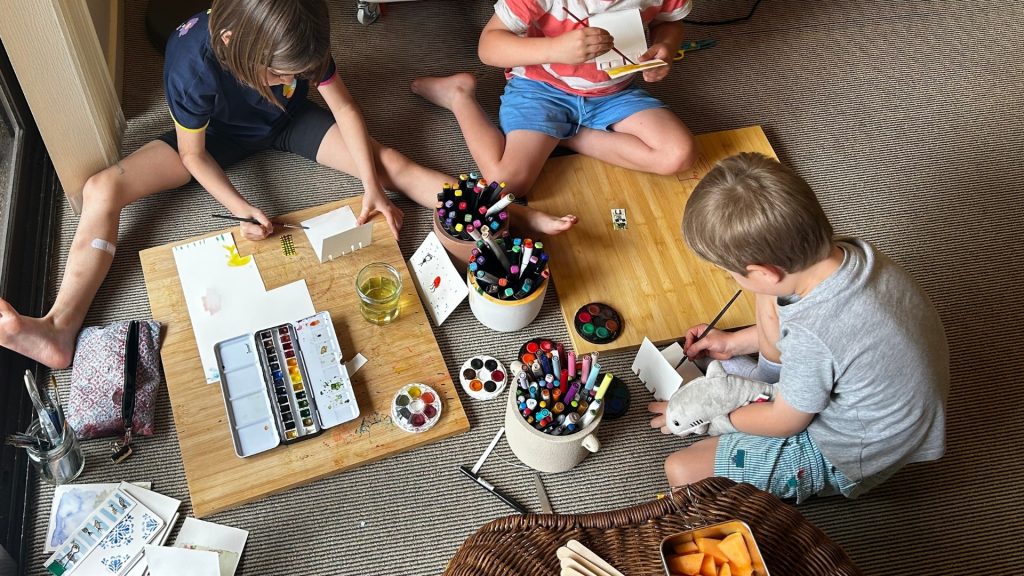
Imaginaria Club offers thoughtfully designed creative learning sessions in Sydney where children explore art, making, storytelling and problem-solving through hands-on experiences.
Inspired by child-centred approaches, our small, carefully guided sessions nurture curiosity, confidence and cognitive development while children experiment with materials, test ideas and discover new ways of thinking through creative exploration.
Many families come to Imaginaria looking for something beyond traditional tutoring: a space where children can develop creativity, independence and a deeper relationship with learning.
We work with families who value thoughtful, personalised learning experiences, including parents seeking enrichment tutoring, homeschooling families and children who thrive in small-group or individual learning environments.
Imaginaria also welcomes bilingual and migrant families who wish to nurture their children’s Spanish while strengthening literacy, cultural identity and connection with language.
Carolina Campos
Arancibia
Founder, teacher, creative director and the person probably replying to your emails at midnight.
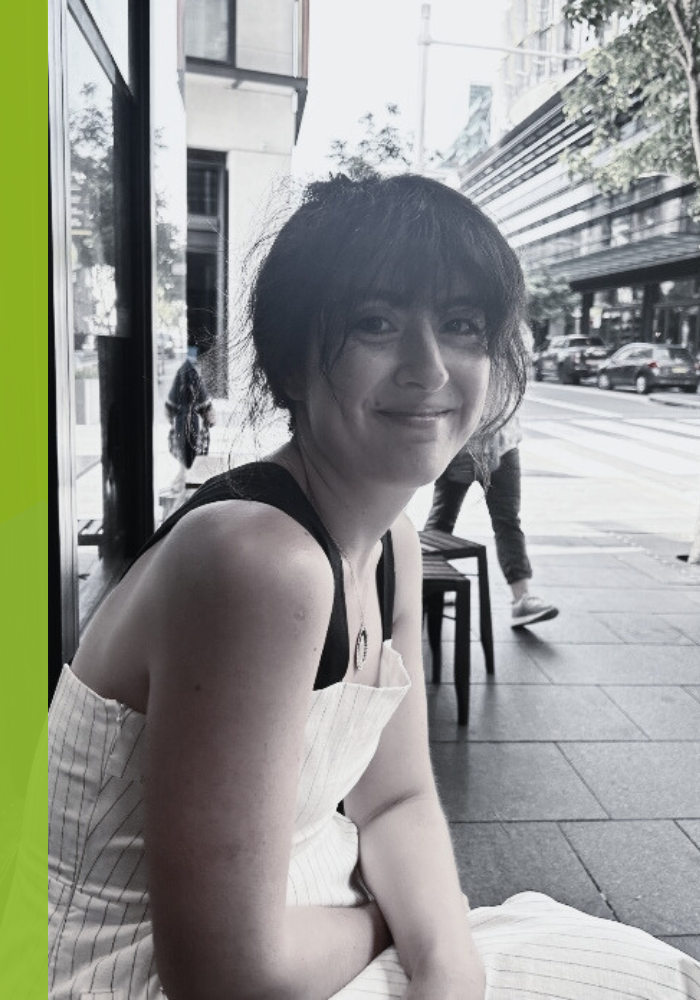
Imaginaria began with a contradiction I could not ignore:
Why do schools speak so often about diversity and individuality while continuing to reproduce the same patterns of pressure, comparison and success?
We say play matters.
We say creativity matters.
We say children learn differently.
And yet many children still spend their days trying to adapt themselves to environments that rarely adapt to them.
+woman
+mother
+migrant
+teacher
+neurodivergent
+BA in Hispanic Linguistics and Literature
From this perspective, art and play are not decorative extras in early childhood education, but essential ways of thinking, connecting and making meaning.”
Our mission
Empowering families to raise a happy and conscious generation, through learning and creative experiences that support children’s cognitive, emotional and social development.
Our work is grounded in research and guided by a pedagogy of play and aesthetics, where learning means creating, exploring and making meaning together.
We see children, families and educators as co-participants in this process, and we design environments that support curiosity, attention, wellbeing and a deep sense of belonging.
The facts
Research note
Play and Cognitive
Development
Play-based experiences support the development of executive functions by engaging children in planning, self-regulation, flexible thinking and problem-solving within meaningful and motivating contexts.
OECD, Art for Art’s Sake?
Educational Research and Innovation
Research note
Visual Arts and
Thinking
Observing images, materials and visual compositions activates complex cognitive processes, including comparison, inference and interpretation.
OECD, Centre for Educational
Research and Innovation (CERI)
Research note
Aesthetic Experience
and Attention
Engagement with the arts cultivates forms of attention that are slow, sustained and deliberate. Through careful observation, reflection and interpretation, aesthetic experiences invite learners to pause, dwell on perception and construct meaning over time, rather than responding to rapid or fragmented stimuli.
Harvard University,
Project Zero
Research note
Making, Language
and Belonging
Meaningful shared activities strengthen social bonds and emotional security, particularly when children and families are able to communicate and participate using their own language.
UNESCO, language, culture and
early childhood education research
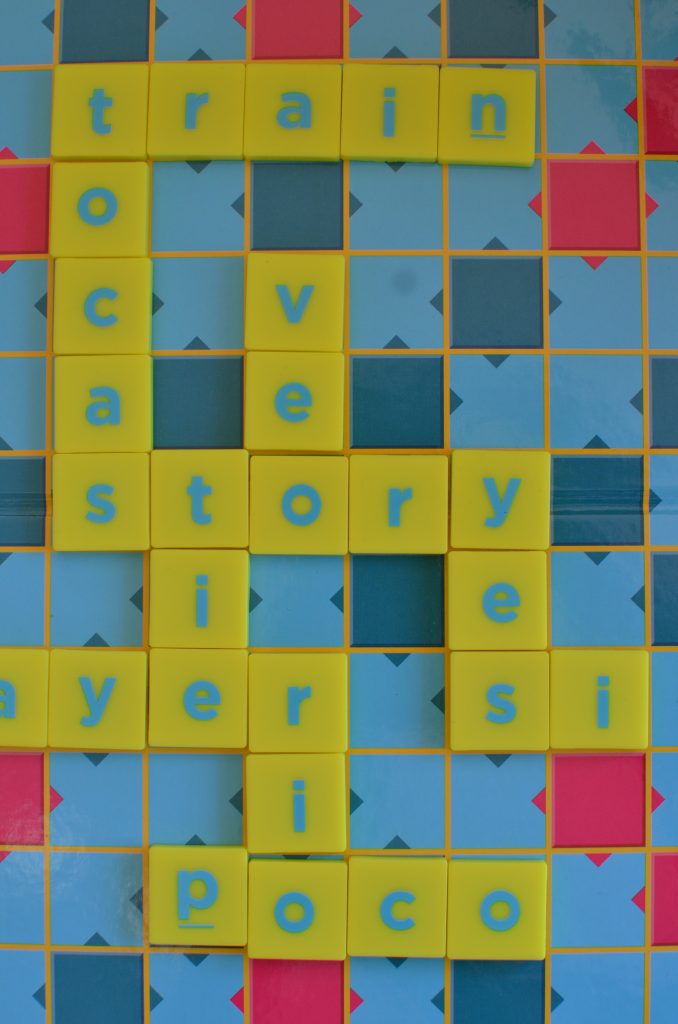
Explore
Imaginaria in Español!
Spanish literacy classes for bilingual children in Sydney.
For families trying to keep a language alive across oceans, routines and school lunches.
Frequently asked questions
Can’t find the answer you’re looking for? We’re here to help.
Because play is a powerful cognitive experience. Through play, children develop attention, self-regulation, problem-solving skills and flexible thinking. Play is not a break from learning — it is one of the main ways young children learn.
Absolutely.
We honour different ways of thinking, feeling and learning. Neurodivergent children and children with disabilities are an essential part of our community.
Families are encouraged to contact us in advance to discuss individual needs.
While we will make reasonable efforts to adapt sessions where possible, we cannot guarantee that all specific requirements can be fully accommodated.
Aesthetic experience is about learning to notice, observe, reflect and interpret. It involves engaging with images, materials, sounds and spaces in ways that foster attention, sensitivity and thinking. It is not about performance or artistic skill, but about how children experience and make sense of the world.
No. Imaginaria does not require prior skills or specific abilities. Our experiences are designed to be inclusive, exploratory and open-ended, allowing each child to participate in their own way.
No. Individual tutoring or small-group experiences at Imaginaria do not replace formal schooling and do not constitute a registered school under Australian education regulations.
While our experiences may draw on selected units or learning areas from the Australian Curriculum, they do not cover the full curriculum requirements and are not designed to meet homeschooling registration obligations on their own.
Imaginaria can be used as a supportive complement to homeschooling or school-based education — offering enrichment, creative learning and additional experiences — but families remain fully responsible for meeting the legal requirements for homeschooling in their state or territory.
It depends on the program.
We offer both English-based creative sessions and Spanish-focused experiences (Lengua Viva). Each program is clearly described so families can choose what best fits their needs.
Not at all.
We welcome children at all levels of Spanish — from complete beginners to fluent speakers. Our sessions are designed to gently support language development through play, creativity and meaningful interaction.
Not always, but it’s something we really value.
When possible, we love having parents nearby. Whether at home or in the park, your presence helps children feel safe, supported and connected.
We understand that life is busy, so sessions can absolutely run without parents if needed.
For online sessions, we do ask that an adult is present at home (even if working in the background). Children shouldn’t be left alone on camera, both for safety and to ensure there is real-time support.
We see learning as something that happens within a family ecosystem — not just in a session.
Sessions can take place at home, in outdoor spaces (such as parks), or online.
We’ll agree on the format that works best for your family.
Just themselves — and curiosity.
We provide materials when needed. For some sessions, we may suggest simple things to have at home.
about us.
about the founder.
Woman +
Mother +
Migrant +
Teacher +
BA in Hispanic Linguistics & Literature.
Imaginaria was born through movement: across countries, languages, classrooms and the everyday experience of raising a child far from home.
My work is informed by research in aesthetic education, visual literacy and multimodal learning, which shows that children begin interpreting the world long before they can read words — through images, spaces, play, materials, relationships and sensory experiences.
From this perspective, art and play are not decorative extras in early childhood education, but essential ways of thinking, connecting and making meaning.
Empowering families to raise a happy and conscious generation, through learning and creative experiences that support children’s cognitive, emotional and social development.
Our pedagogical approach recognises children as curious, capable and naturally motivated to understand the world around them. Learning grows from their questions, interests and explorations.
We see children, families and educators as co-participants in this process, and we design environments that support curiosity, attention, wellbeing and a deep sense of belonging.
the facts
1
2
3
4